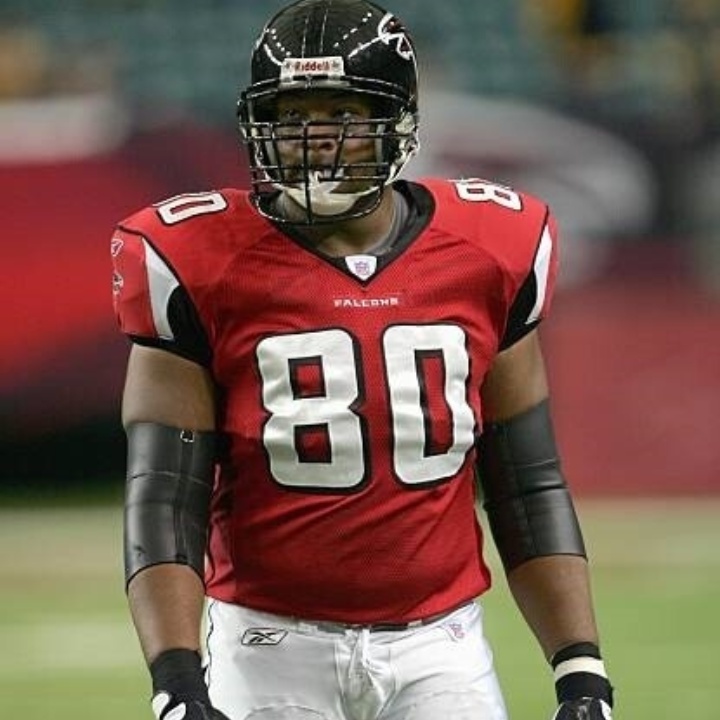
Catching Up with Former Player Rep: Eric Beverly
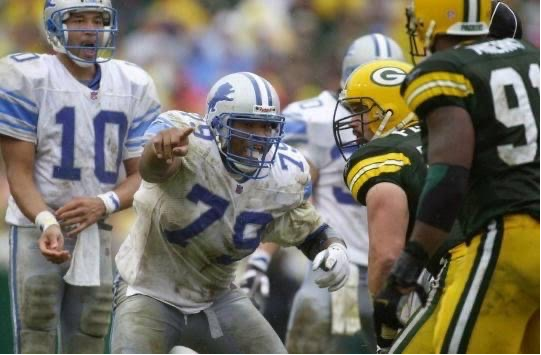
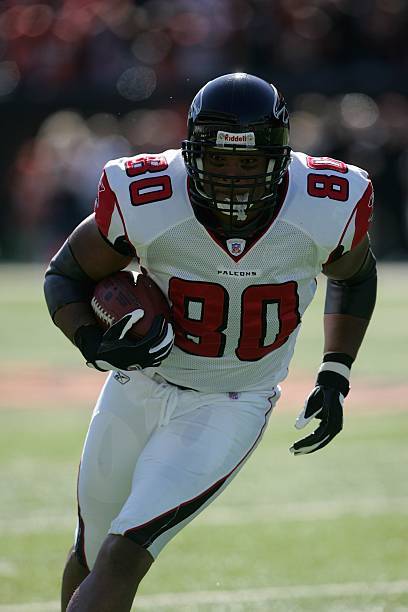
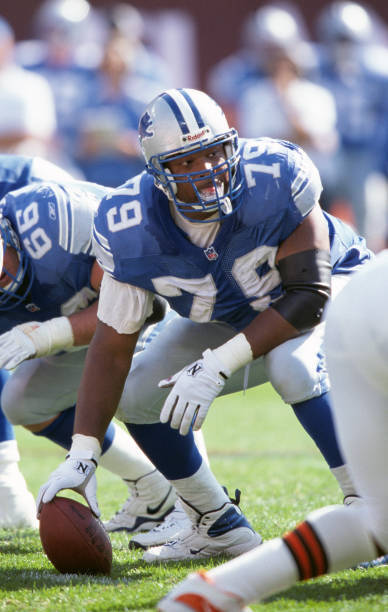
A former Offensive Lineman and Tight End, Eric Beverly enjoyed a 10 year career for the Detroit Lions and Atlanta Falcons after graduating from Miami (OH). We had the opportunity to catch up with Eric to get his insights into his life during and after football.
What inspired you to become a Player Rep?
I entered the league in 1997 as an undrafted free agent. When I was on the practice squad, I just took the onus of understanding the business and the more political side of the dynamics between the NFL and NFLPA. I also had good mentors that really took me under their wing that were Player Reps or engaged in some capacity of working with our team or community like Kevin Glover and Robert Porcher. Those individuals weren't necessarily Player Reps, but they were very in tune with what was going on at the league level and the PA level that affected the team. I think the biggest thing for me was that I didn't see an advocate for people at my level. A lot of the Player Reps were the starters, were the Pro Bowlers, were the stars on the team, first round draft picks. I wanted to have representation of individuals that weren't the one-percenters and give the rest of players a seat at the table to be part of discussions. To advocate for that population meant a lot for me, and that’s probably the primary reason why I got involved when I took on the position in the early 2000s.
What lessons and experiences did you take away from being a Player Rep?
I think it was really the realization that there was a bigger space that I was operating in. It opened me up to the bigger world and the bigger picture of professional sports. The dynamics behind it, the support that was driven from the Players Association level. Also, understanding the dynamics at the league level that drove the business but really affected the players. Knowing more about the why of what was going on, how we practice, salary guidelines or contractual guidelines that were in place under the CBA at that time and how those changes would work if needed, how they would come to fruition and the stressors. As you've seen, the dynamics of how professional sports on the player side have changed since the early late 90s, early 2000s. I really feel like now players have more of a voice, and more of a leg to stand on versus where they were before, where the league had a lot more overwhelming power. The power to really shift the narrative to really affect changes whether it was player agreed upon or not. You see it now in the finances of it, but also, I think you see it more in the voice, especially when it comes to player safety. As a Player Rep, I got to understand and develop in being a voice for a body of people.
What is one piece of advice you wish you had gotten when you had started your career?
A greater understanding of the narrow window of the time you have at the level. It was told to me, but I didn't fully recognize the urgency to really take advantage of that platform in several ways. I think several ways of building my professional career but building outside dynamics of transitioning to another profession, having more of a voice in the community to affect change. Because I think the best thing someone said to me is that people want to talk to current players more than former players. Those doors that are open because you played in NFL, more doors are open for those current athletes. For me, my transition I won't say was smooth, but I think it was smoother than others. It also did have hiccups in regard to transitioning out of the league trying to identify exactly what I wanted to do and where my passion was. So, I think some of those things where there were hiccups for me could have been smoother if I could take advantage more of that platform. The last thing I would say is really enjoying the moment. If someone told me that you really will regret not enjoying the moment of being an athlete at that level, I wish I would’ve taken in the moments more. I was so hyper focused on making sure I performed in the immediate moment that I didn't absorb it. I didn't take advantage of just looking around to say, “man, this is really cool.”. I blocked out fans, the chatter, the engagements because I was really focused on performing at a level because this is a very competitive field. Just wish I opened my eyes up a bit more to say man this is amazing.
What is one piece of advice you have for players transitioning out of the league?
This relates to the space I am currently in, taking advantage of the resources that are available for transitioning athletes. From health and wellness, to professional development and educational engagements, these are earned benefits for you. There's a lot of information and opportunities to assist individuals with that transition that really can boost them, whereas if you don't pay attention to that, you're wasting money that you earned. There are opportunities for executive health engagements, there's opportunities for continuing education with no out of pocket costs. Then also leveraging where you just came from and taking the attributes of what the game of football has given individuals and really be confident in applying that to their given passion. I think a lot of times we leave the game feeling like I played football in the league for 10 years, 5 in college, and all throughout my childhood so all I am was a football player. You’re not, so don't identify yourself as that. What you can do is take all the aspects of critical thinking, resilience, team building, strategizing, overcoming adversity to your next steps. There's a lot of aspects of the game itself that come very easy for us to pivot in the moment in changing environments that individuals that are in fields, law, medicine, education, etc. that they must learn that comes easy for us. What we find difficult at times is, “Oh, well, I don't know that industry.” Another industry is all just jargon or communication that you never had before that you can learn. When we as players are going through offensive plays and an average person hears “Trips left, I right, 387 five Z post”, who knows? If you go to the common person, they're not going to know what that is, but that tells 11 guys what to execute. Those are things in regular life that happen daily, and we've done that all our lives. All you're doing is just trying to apply all that to a new industry, and it's easy for us to do it. The communication, the team building, the working with other people from different backgrounds, we've done that for so long. All you need to do is have confidence in that and just pour it into somewhere else that you're passionate about.
What are you doing now in your career and how did you transition into that role?
I'm currently the Director of Operations for the Tulane University Center for Sport, which sits within the School of Medicine at Tulane University. Our center focuses on several key areas. We provide clinical services for former professional athletes and military veterans, and we also support programs at the high‑school level. In addition, we conduct research on topics such as athlete aging, cardiovascular health in former athletes, and cognitive health. We also have a strong educational mission. We offer a fully online, asynchronous master’s program designed for working professionals interested in entering the sports industry. Students can earn stand‑alone certificates or stack them toward a full master’s degree in areas such as sport administration, sport coaching, sports medicine, sport security, and mental health in sport. We also support allied health professionals through continuing education opportunities. A major part of our work involves community engagement. We collaborate across Tulane’s various schools—including medicine, law, liberal arts, and analytics—to host events that bring high‑school students and community members to campus. The goal is to expand regional impact and promote educational awareness. I’ve been in this space for about eight years. Our center partners with organizations like the NFL and the NFL Players Association—particularly through The Trust—on the medical side. We also receive philanthropic support for our educational and research initiatives. In my role, I’m responsible for ensuring the center runs smoothly. I work under a medical director and help manage a team of about 30 people, including both faculty and staff. My responsibilities include resource allocation, personnel management, daily operations, strategic development, and fundraising. Overall, I believe sport brings people together, and that sense of connection is a driving force behind the work we do.
How do you feel that the lessons you learned playing football apply to your career?
Just the concept of team itself. So being focused on not self but the success of us. It's something that is paramount that I learned in the game of football because you must take 11 individuals to execute one play. It's not one person; it's 11 individuals to truly be successful. Can you have short-term success with one individual? By all means, but in the long run, you need everybody on that field at that given time to execute. That's one of the things that I learned early on in life, transitioning out of high school, going to college in a predominantly white institution at Miami University (OH), that diversity is not just people who look like me, color of my skin or gender, it’s where we came from. You and I can look exactly alike but come from different parts of the world, country or even the state and have different upbringings, different experiences. If you look at diversity, it truly is experience, and it's learned experience where you can gain and garner some education. With football, sitting next to an individual that grew up in West Virginia versus sitting next to an individual that grew up in California that had different experiences than I do, that handled the world differently, that was a learning aspect for me. It grew me as a person and it helped me to be the person I am right now, not only in my profession, but also in my relationship with my wife, relationship with my daughter, and how I engage with people in the community.
Why do you think more players should be involved and active with the Players Association?
The platform that the Players Association is, it truly is the organization that can galvanize advocacy for this population. I love that galvanization in the army of individuals that have been gathered through the Players Association to really advocate for not only current football players at the National Football League, but the game itself overall. One of the things that we all must realize is that we're going to transition in some form or fashion. And when that transition happens, and however it happens, you're going to have to lean on somebody, and the Players Association provides a platform of individuals, programs, resources, to help you and your family through that transition. I think it's very important for you to stay engaged, but also important for you to stay engaged to support the brother that's next to you. A guy you played with, a younger individual, whoever it is that you may or may not know that you can help and that can learn from the lessons that you went through. Also, making sure that the Players Association's mission stays the mission. There's changing dynamics in different atmospheres that we're all going through, but I think the more individuals that you can stay truly involved in those aspects can help us maintain the mission and so it doesn't change. I've utilized several programs including continuing education, the Brain and Body Assessment, career building through The Trust, mental health aspects for myself and my family. What’s important for me in my personal and professional space is utilizing those services and broadening communication outwards to former teammates and players to make sure they are taking advantage of them.
What does the NFLPA Fraternity mean to you?
Brotherhood, love, camaraderie, remembrance in history.